



Dental Health
*This content has been reviewed by Dr. Wendy Ward (Professor, Kinesiology and Health Sciences, Brock University); last updated August 2026
Cariogenic foods are those that produce or promote the development of tooth decay.
- Risk Factors for Dental Caries. There are several factors that increase a person's risk of developing dental caries. Some cannot be controlled while others can be modified to reduce risk.
- Cariogenic Food Can Promote Development of Tooth Decay. All fermentable carbohydrates, including sugars, contribute to the development of tooth decay.
- How Frequency and Duration of Exposure to Cariogenic Foods Increases Risk. The longer and more frequently teeth are exposed to cariogenic foods and beverages, the greater the risk of tooth decay.
- Preventing Tooth Decay. Good oral hygiene and balanced eating habits can help prevent tooth decay.
Risk Factors for Dental Caries
According to the 2007-2009 Canadian Health Measures Survey (CHMS), most Canadians had experienced dental caries:
- 57% of 6–11-year-olds,
- 59% of 12–19-year-olds, and
- 96% of adults.
There are several factors that increase a person's risk of developing dental caries. Some cannot be controlled while others can be modified to reduce risk (1, 2).
| Non-Modifiable Risk Factors | Modifiable Risk Factors |
|---|---|
|
|
Cariogenic Foods Can Promote Development of Tooth Decay
Cariogenic foods produce or promote the development of tooth decay (3). Cariogenic foods:
- Contain highly fermentable carbohydrates, including starch and sugars;
- May have a sticky consistency; and
- Are broken down into sugars in the mouth by the enzyme amylase.
These sugars are then fermented by oral bacteria into organic acids, which lower the pH in the mouth and can cause tooth enamel to begin to dissolve or demineralize (see diagram below).
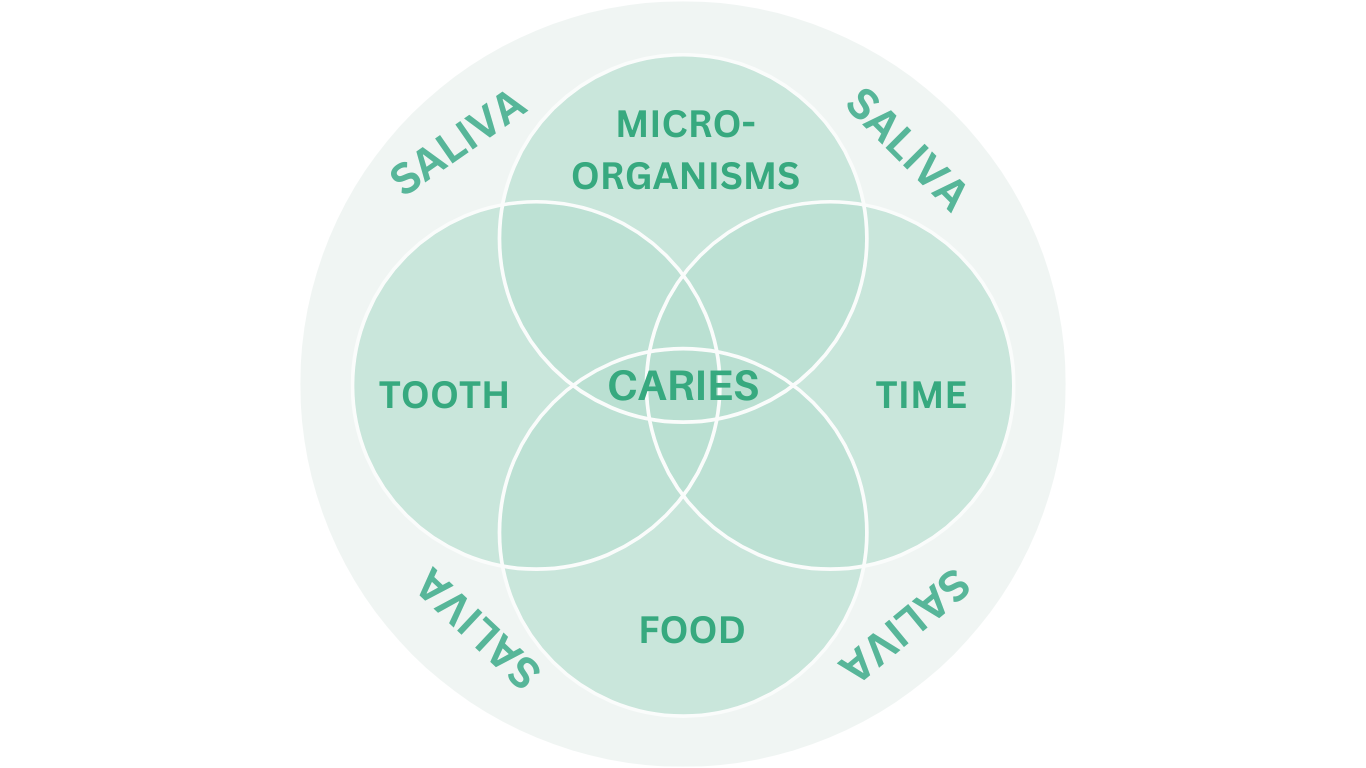
Examples of cariogenic foods and beverages include:
- Sugary and starchy foods such as bread, rice, noodles, crackers, cakes, sweetened cereals, and hard and chewy candies;
- Sticky foods such as dried fruits, fruit snacks, cookies, and chewy candies (toffee);
- Beverages such as sweetened soda, fruit drinks, fruit juice and other sweetened beverages (including sugar-free sodas, which contains acid that erodes tooth enamel).
How Frequency and Exposure to Cariogenic Foods Increases Risk of Tooth Decay
It is not only the total amount of sugars and starches consumed that contributes to dental caries, but also
- How often they are consumed,
- How long the food is in the mouth, and
- Whether it sticks to the teeth (3, 4).
The longer and more frequently teeth are in contact with fermentable carbohydrates, the greater cumulative exposure of the teeth to acids, leading to demineralization. This can occur by:
- ‘Grazing’ on foods or sipping beverages over long periods of time;
- Foods sticking in the crevices between teeth or deep fissures of molars.
Studies show that frequently consuming fermentable carbohydrates, especially between meals, is a greater risk to dental health than the total amount consumed (4, 5).
Preventing Tooth Decay
Good oral hygiene and balanced eating habits can help prevent tooth decay.
Oral Care:
- In Canada and other developed countries, good oral hygiene practices are the primary strategies for preventing tooth decay and dental caries. This includes using fluoride, toothbrushing, flossing, and regular dental checkups (6).
- The Canadian Dental Association encourages Canadians to brush after meals, floss routinely, and visit the dentist for regular check-ups and professional cleanings (7). Frequency is determined by individual needs. When brushing is not possible, rinsing with water or mouthwash after eating or drinking fermentable carbohydrates can help limit the effect of cariogenic bacteria on teeth.
Eating Habits:
- Eat a well-balanced diet. Changes to eating habits, such as reducing the frequency and duration of sugars and starch consumption can also help:
- The World Health Organization recommends that free sugars consumption be reduced to less than 10% of energy, based on observational studies related to dental caries (8-10).
- Eat sugars and starches as part of a meal or in combination with high-protein foods rather than eating them continuously throughout the day.
- Make water your drink of choice and limit the intake of cariogenic beverages such as soda and fruit drinks.
- Include foods that stimulate saliva flow, which reduces bacterial fermentation of residual carbohydrates.
- Consume foods that are a source of fluoride, calcium and/or phosphate to promote remineralization of tooth enamel and buffer salivary pH.
- Specific polyphenols - such as those in green tea - have anti-bacterial properties that help protect teeth from decay.
For more information, additional resources include:
- Carbohydrate News - Sugars and Health: The Current Science
- Frequently Asked Questions About Sugar - Dental Health
Relevant CSI news items include:
References
- Pitts N, Zero D. White paper on dental caries prevention and management. Geneva: FDI World Dental Federation; 2017.
- World Health Organization. Oral health [Internet]. World Health Organization; 2025 Mar 17 [cited 2026 Aug 20].
- Touger-Decker R, van Loveren C. Sugars and dental caries. Am J Clin Nutr. 2003;78(suppl): 881S-92S, 2003.
- Van Loveren CV. Sugar restriction for caries prevention: Amount and frequency. Which is more important? Caries Res. 2019;53(2):168-175.
- Hancock S, Zinn C, Schofield G. The consumption of processed sugar- and starch-containing foods, and dental caries: A systematic review. Eur J Oral Sci. 2020;128(6):467-475.
- Health Canada. Oral health [Internet]. Government of Canada; 2025 Feb 10 [cited 2026 Aug 20].
- Canadian Dental Association. Oral Health-Good for Life [Internet]. Canadian Dental Association; 2025 [cited 2026 Aug 20].
- World Health Organization. Guideline: Sugars intake for adults and children. Geneva: World Health Organization; 2015.
- Halvorsrud K, Lewney J, Craig D, Moynihan PJ. Effects of Starch of Oral Health: Systematic Review to Inform WHO Guideline. J Dent Res. 2019;98(1):46-53.
- Moores CJ, Kelly SAM, Moynihan PJ. Systematic review of the effect on caries of sugars intake: Ten-year update. J Dent Res. 2022;101(9):1034-1045.


